We’ve been expecting Apple to transition to in-house silicon for the Mac for a while now. Countless rumors and leaks further strengthened the capability of their chips, and increased the viability of fully moving away from Intel. Apple officially announced the move at WWDC20, and promised that they’ll release the first Macs with their silicon by the end of this year. And, that day’s here.
Why Apple silicon?

Since Apple has been putting their own chips into their mobile devices for quite a while now, the same thing happening to Mac was inevitable. But, one thing made Apple kick development into top gear a lot earlier than expected — the inaptitude of Intel.
When the new MacBook Pro debuted in 2016, it received a lot of criticism for it’s thermal throttling issues. Apple designed the thin chassis based on Intel promising that it would transition to the efficient 10nm lithography for it’s chips, but didn’t deliver. Four years later, Intel is still stuck at 14nm for a majority of it’s desktop and high-end laptop chips, with only lower-power chips getting the new 10nm process.
This disappointment from Intel is a major factor for Apple’s decision to go with their own silicon. A question many ask is, why not use AMD chips? Ryzen has proven it’s potential and may work great with Radeon GPUs, but having a fully vertically-integrated supply chain gives Apple more flexibility and profit margins.
A deep-dive into M1
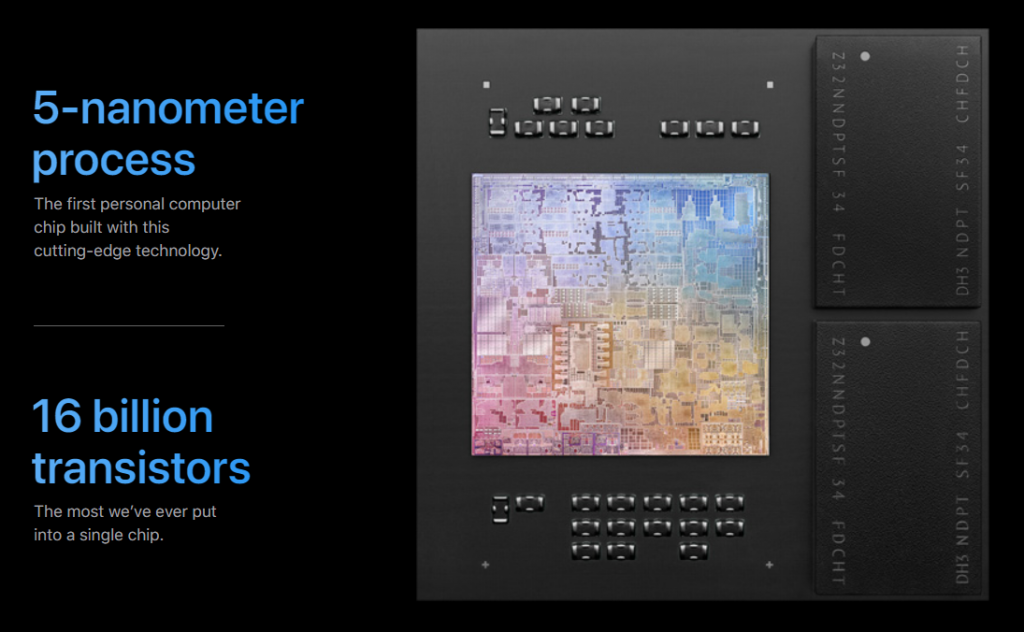
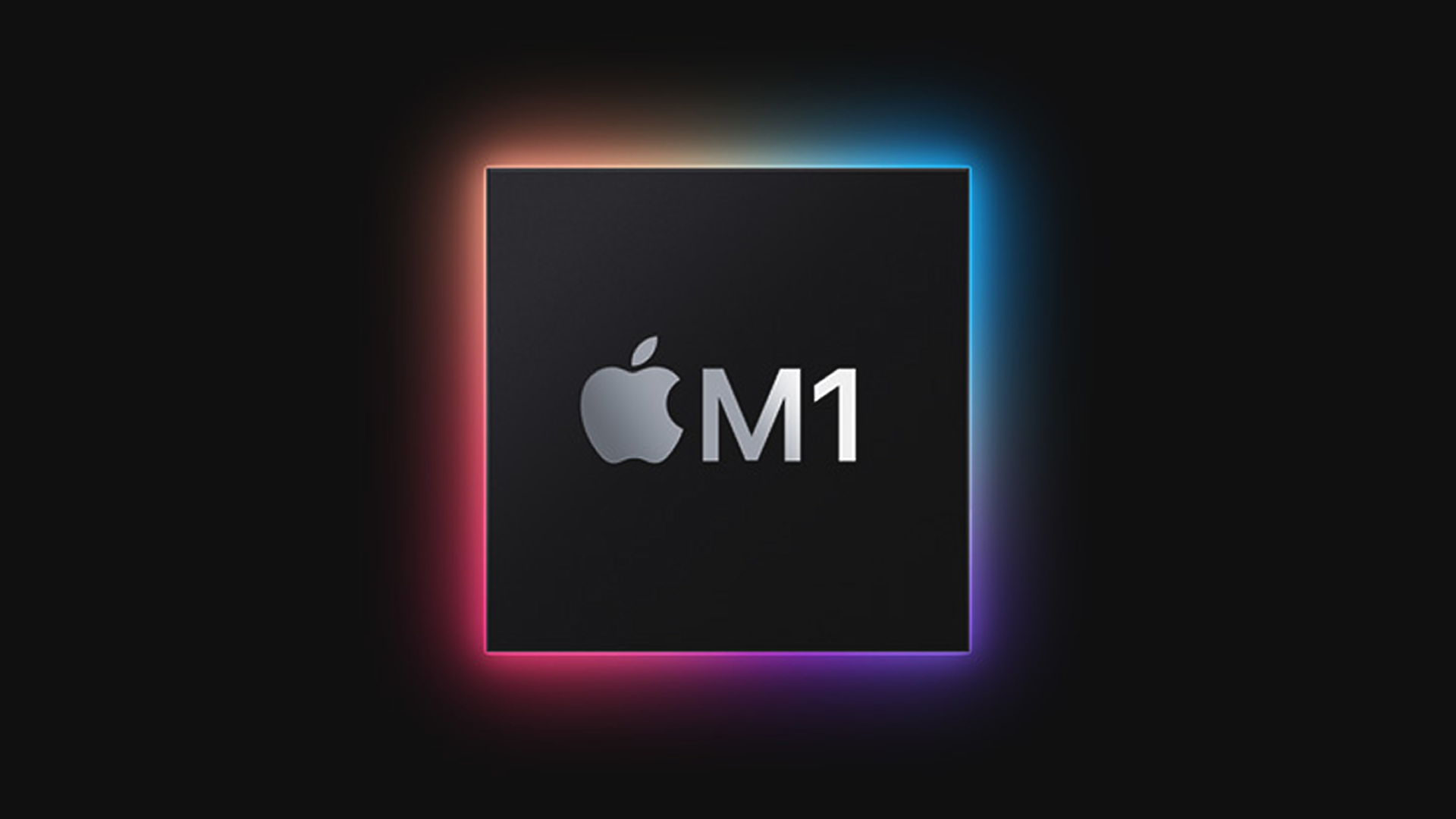
Even though Apple says the M1 is the first chip designed “specifically for Mac”, it’s roots lie in the A14 Bionic. Built on the same 5nm process, it has 4 high-performance cores, 4 high-efficiency cores, 7-8 GPU cores, 16-core neural engine, and up to 16GB unified memory. Apple doesn’t provide official specs on the power consumption, but reports say that it’s under 15W.
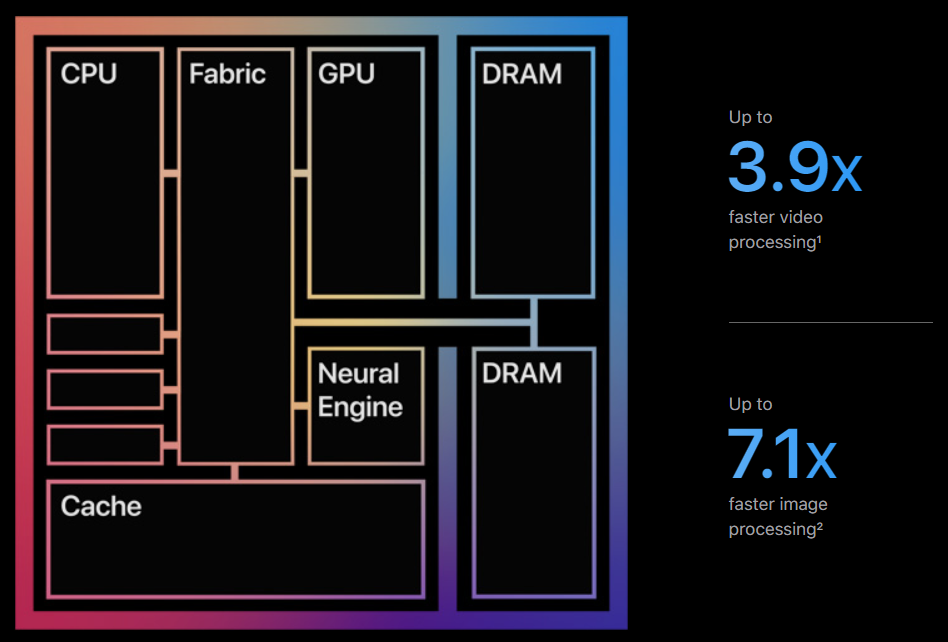
The unified memory seems to have a huge impact on performance, as the integrated memory on the chip has far lower latency compared to traditional RAM, while having much higher bandwidth. People seem to be concerned about the 16GB memory limit, but that’s because we’re only used to seeing RAM management with Intel chips. With both Apple hardware and software working together, we might need much less memory for the same task compared to Intel processors, just like how iPhones use considerably less RAM compared to Android phones.
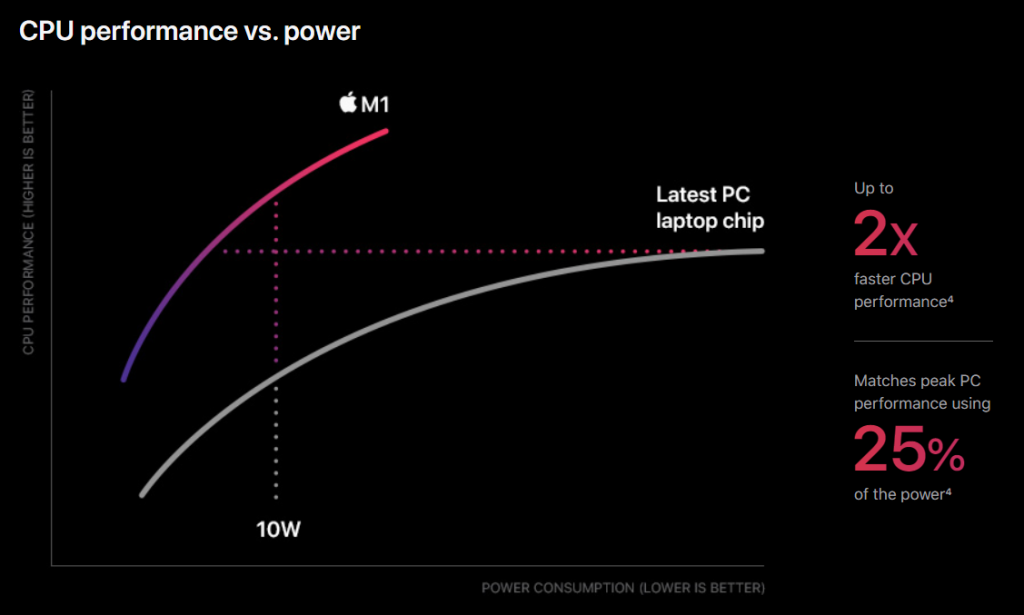
Apple has big claims for the M1, using terms such as the “World’s fastest CPU Core” and “World’s best CPU Performance per Watt”. And from the rather vague graphs they show, it seems likely that their claims are spot-on. The chip they’re comparing it to is the i7-1060NG7, which features 4 cores. The efficient 5nm lithography really shines here, delivering up to 2x faster CPU performance while consuming only 1/4th the power.
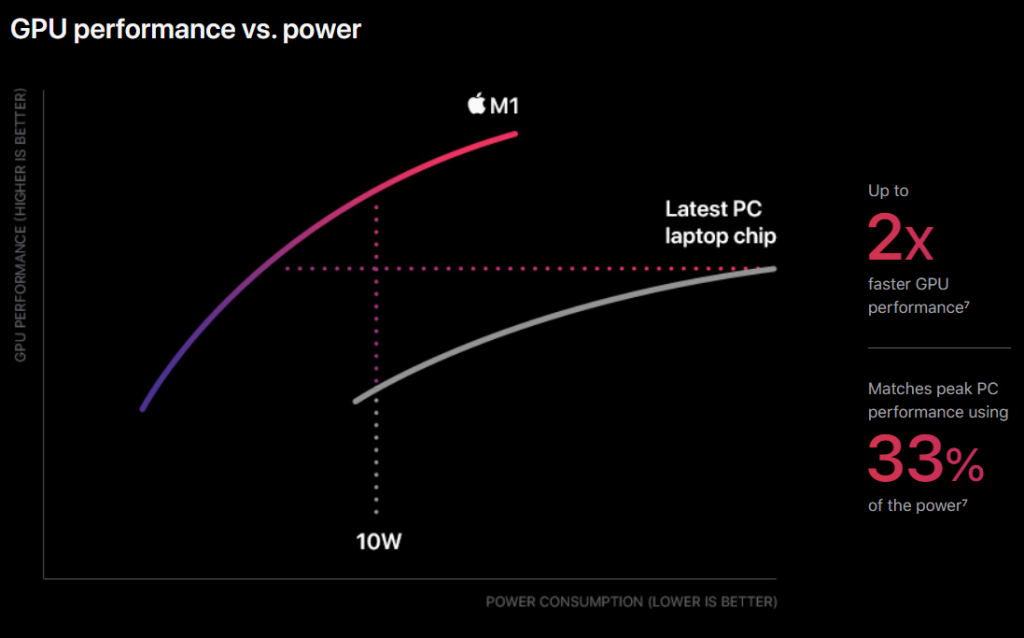
They aren’t holding back on the GPU prowess either. They’re making bold claims, calling this the “World’s fastest integrated graphics in a personal computer”. If we assume the “Latest PC Laptop Chip” refers to Intel Iris Plus G7 iGPU used in the i7-1060NG7, Apple touts that the M1’s 7-8 core GPU can deliver 2x faster performance, while only consuming 1/3rd the power. It took Intel a long time to reach the iGPU performance they currently have, so Apple leapfrogging them is certainly impressive. A 2x performance uplift means that the Apple GPU theoretically even beats the latest 11th Gen Xe graphics from Intel. We have to see if this performance still holds when AMD releases new APUs based on Navi, but they simply can’t beat the macOS Big Sur optimizations.
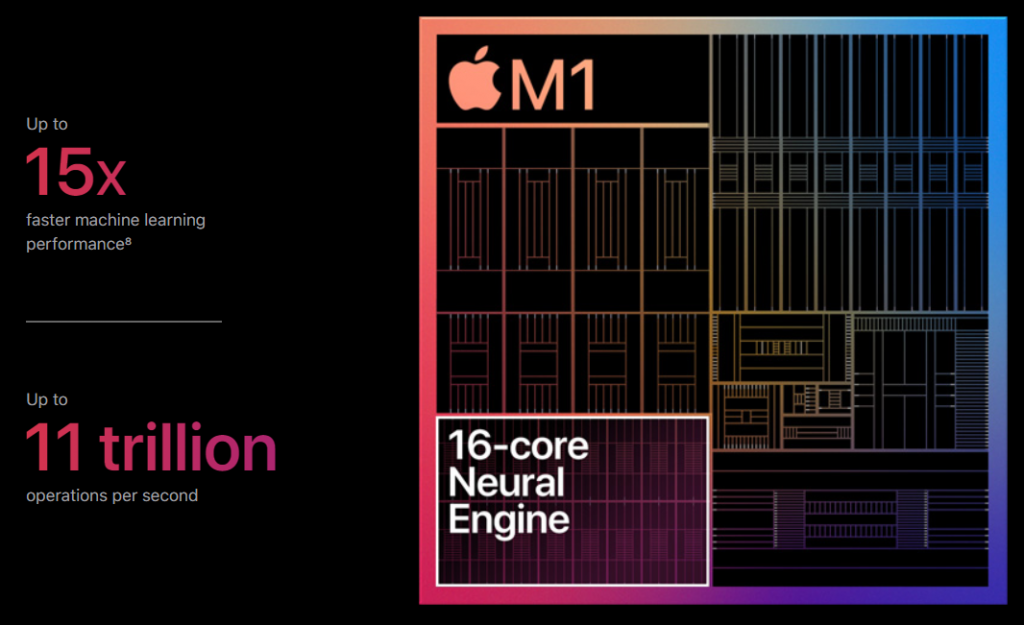
We get the same 16-core neural engine from the A14, which gives 15x faster performance in machine-learning based tasks compared to the previous generation processors. The benefits of this can be seen in many apps — Final Cut Pro can intelligently frame a clip in a fraction of the time, Pixelmator Pro can magically increase sharpness and detail at incredible speeds, and every app with ML‑powered features benefits from performance never before seen on Mac.
macOS Big Sur
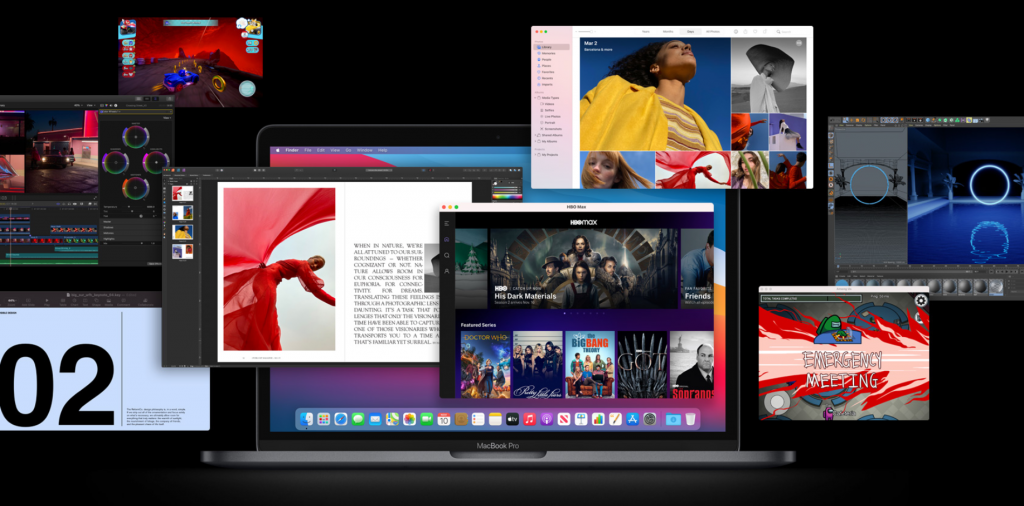
As always, the reason Apple products work so seamlessly is because of the tight software-hardware integration and optimization. macOS Big Sur was made from the ground-up to work best on Apple silicon, and it shows in the performance of the OS. From smooth system animation to playing back and editing RAW video, everything runs smooth thanks to all native Apple apps being rewritten from the ground-up for M1 and upcoming Apple chips.
Universal Apps and Rosetta 2 will help with the transition from Intel to Apple silicon. Universal Apps contain code for both Intel and Apple silicon Macs, so downloading from the App Store won’t be an issue. And for the apps that aren’t yet compatible with Apple silicon, the Rosetta 2 translation layer makes Intel code run super well on Apple chips, often being faster in translation than running on native Intel.
Big Sur also brings forward the huge advantage of being able to run iOS and iPad OS apps on Apple silicon Macs. This enables a lot more flexibility for users, and developers can use similar code for all three platforms now. This brings forward an interesting question — can the iPad run a touch-optimized version of Big Sur, then?
Should Intel and AMD be worried?
In short, yes. In a single day, Apple has wiped out the entire thin-and-light laptop, and mid-tier desktop market in performance and power-efficiency. Lower-power desktop chips (eg. i3 10300) and laptop chips (eg. R7 4800U, i7 1065G7) are all obsolete now, especially when battery life is concerned. This is a large part of the market that Apple can now dominate.
This isn’t the real deal, though. Apple has said many times now that that there will be “a series” of Apple silicon chips for the Mac, and the M1 is just the start, and the least powerful model. Next year, we’ll be able to see how well the high-power M chips powering the MacBook Pro 16″ and iMacs perform — and based on how they’re going, I have huge expectations. If Intel doesn’t shift their high-performance line to 10nm next year, they’re going to have a huge problem on their hands. AMD could still survive for a while as they’re on a 7nm node, and have shown that high-performance laptops can last a lot of time on battery (Zephyrus G14). But, I don’t see them having an advantage there for long.
This all leads to one conclusion: the big chip makers and Windows should move onto ARM-based chips. Fast.
Apple Apple A14 Apple M1 apple silicon imac imac pro mac mini mac pro macbook macbook air macbook pro
Last modified: November 11, 2020